
In our daily operations, we use high-quality and durable European glass processing equipment, which we continuously upgrade to ensure the best possible solutions for our clients — from standard jobs to complex custom shapes.
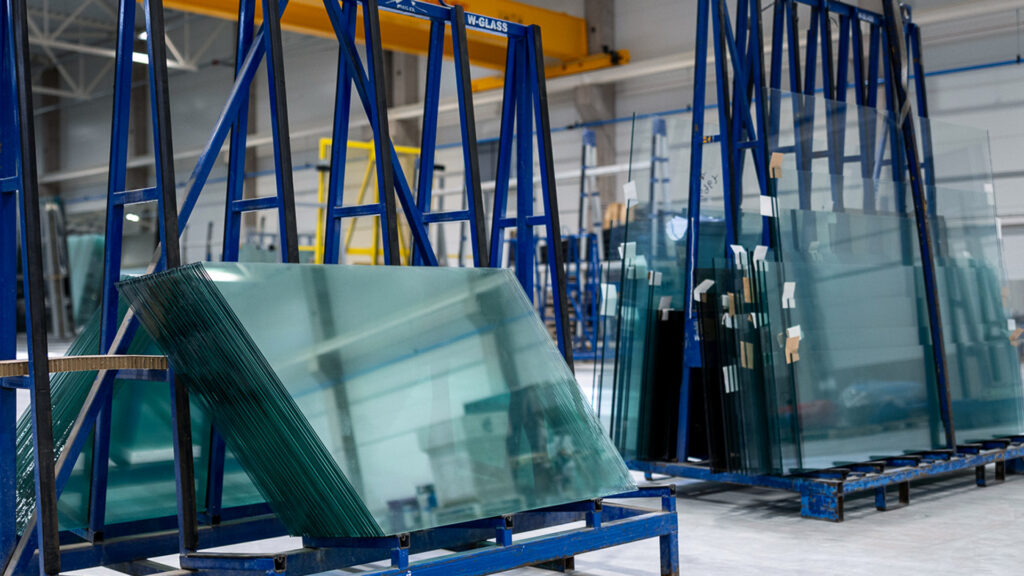
The flat glass processing cycle begins with glass cutting. W-Glass operates a fully automated LiSEC cutting line.
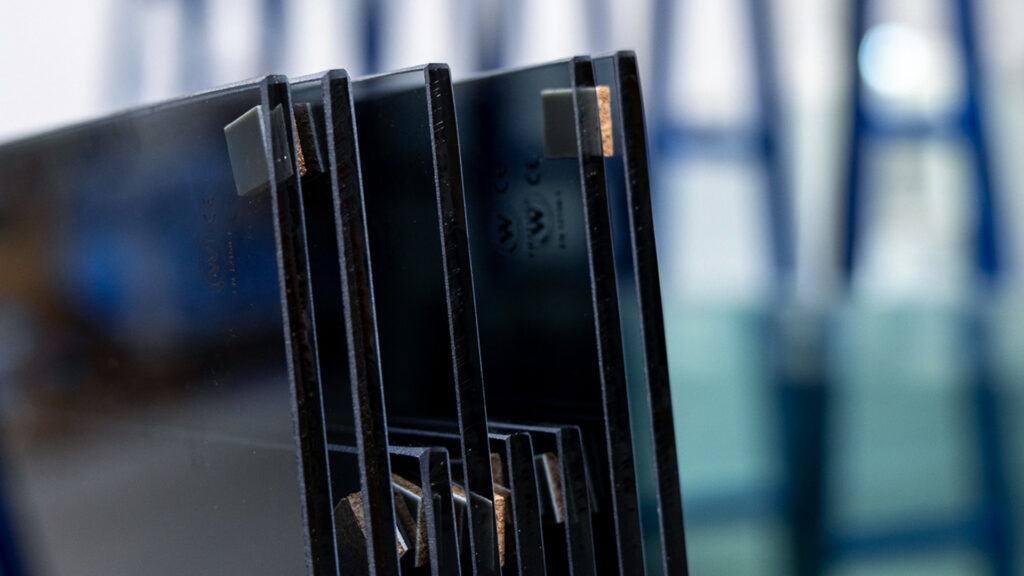
Glass edges are processed according to the intended application and requirements. We offer arrised edges, flat polished edges, ½ C-edges, C-edges, and 45-degree bevelled edges.
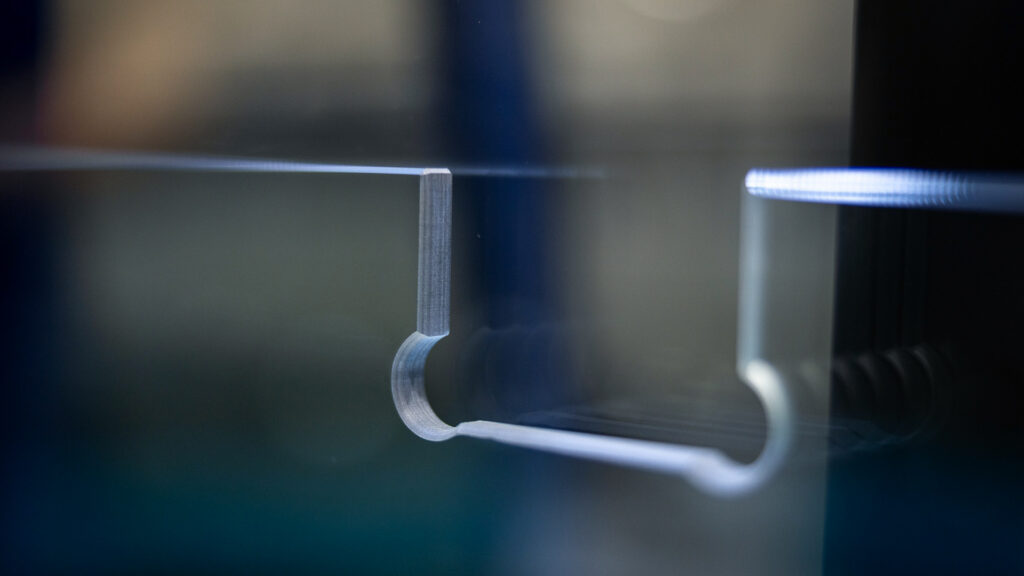
Cut-outs of various shapes and sizes can be made in glass. When drilling, consideration must be given to the glass thickness, the diameter of the hole, and the distance of the hole from the glass edge.
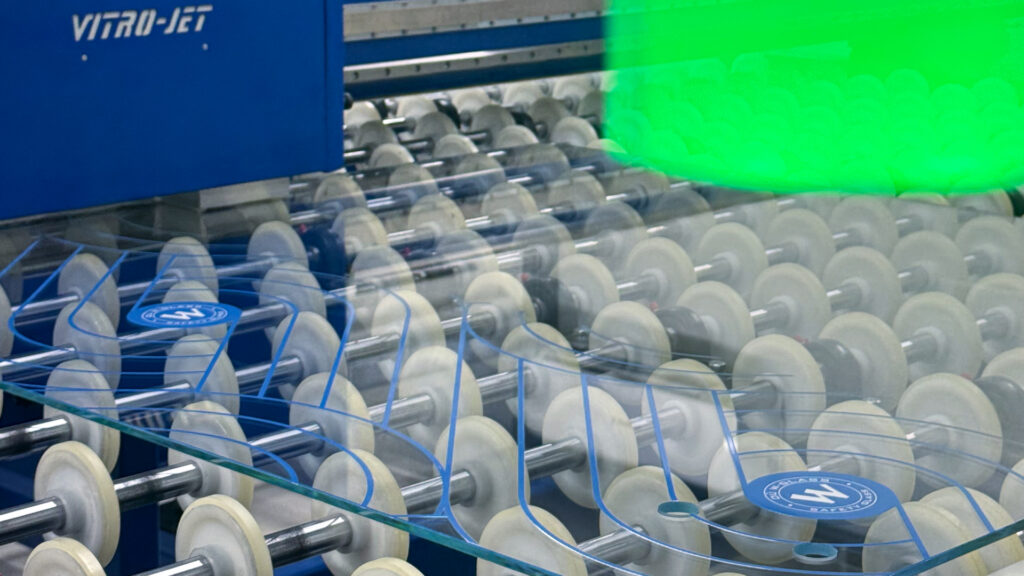
Digital printing is an excellent solution for personalizing glass with patterns, graphics, and text.
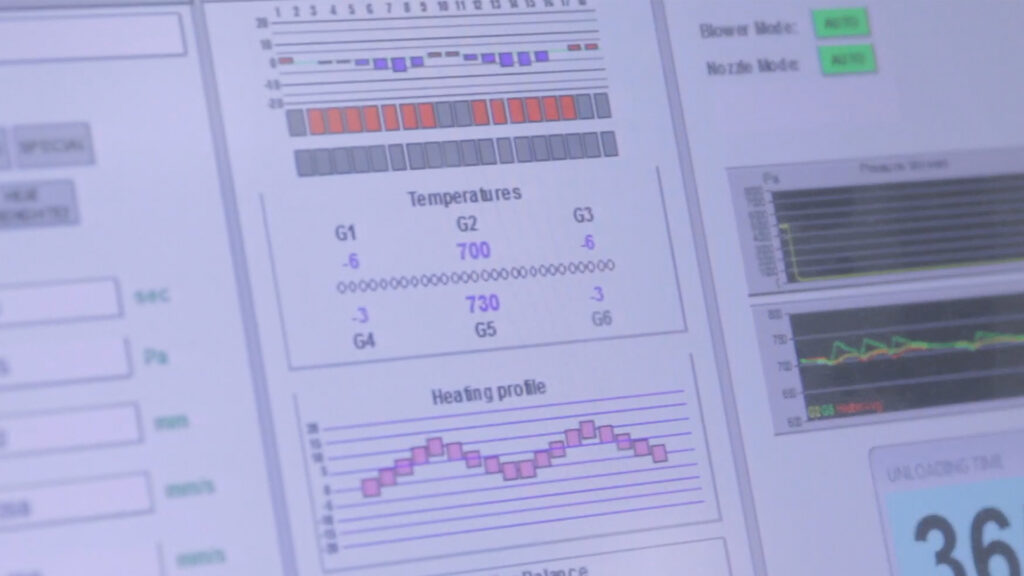
Tempering gives glass increased strength and safety. Once thermally toughened, the glass can no longer be cut, drilled, or ground.
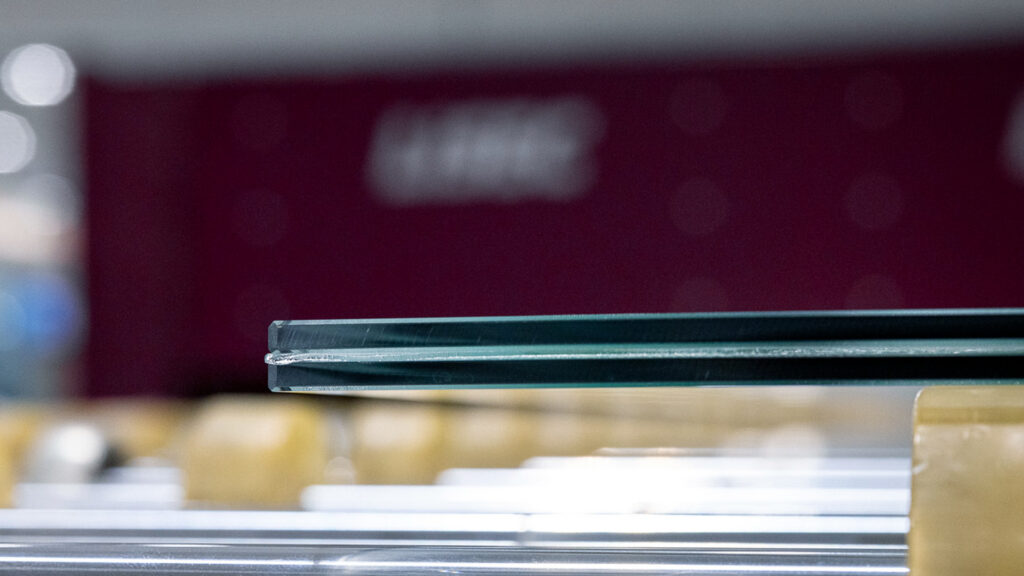
Lamination is the process of bonding two or more glass panes together using a special interlayer. For lamination, we use clear, colored, or functional PVB interlayers.
We offer optional protective film application for all glass products and laminates to ensure additional protection during transport and subsequent storage in warehouses or on construction sites. Both single-sided and double-sided application with 50-micron protective film is available.
The film is easy to remove and protects the glass surface from unwanted defects. It also provides UV protection. To avoid adhesive residue, the film must be removed within 180 days.
Maximum application time on glass: 180 days (at temperatures up to 40°C)
Thickness: 50 microns ±10%
Material: LLDPE UV3
For enhanced safety, we offer the application of a safety film to the rear side of mirrors. In the event of breakage, the film holds the fragments together and reduces the risk of injury.
Thickness: 60 microns
Material: polypropylene safety film coated with a special acrylic-based adhesive
Our fully automated LiSEC cutting line ensures fast and dimensionally accurate cutting, including custom-shaped components. Thanks to an intelligent automatic optimization system, we achieve maximum material utilization and efficiency.
Shapes that cannot be processed on the cutting line are manufactured using CNC machining.
4 - 19 mm
Max. 3210 x 6000 mm
Edge processing improves the safety, durability, and aesthetic appearance of glass. Our advanced grinding technologies enable arrised edges, flat and bevel polishing, ½ C-edges, C-edges, and 45-degree bevels, ensuring precision and quality for every application.
Arrised edge
Removes sharp edges, making the glass safer to handle.
Flat edge
Provides a bevelled edge finish, adding an elegant appearance to the glass.
1/2 C grind
Provides a soft rounded profile to one edge of the glass, improving both safety and aesthetics.
C grind
Creates a fully rounded glass edge, ensuring a smooth and safe finish.
45 edge grind
Creates an angular bevel on the glass edge, enabling the joining of multiple glass panels.
Flat edges, ½ C-edges, C-edges, and 45-degree bevels are available with either a matte or polished finish.
Custom-shaped glass components are produced with high-precision drilling and cut-outs using a LiSEC Topdrill drill–mill center and CNC machining. Our advanced equipment allows us to manufacture complex geometries and oversized elements beyond the capabilities of standard cutting table systems.
4 - 19 mm
Max. 2200 x 4800 mm
All holes and cut-outs are made prior to glass tempering. Internal corners must be rounded, and minimum distances from edges and between holes must be observed. If necessary, we assist in optimizing the technical solution.
Digital glass printing enables the creation of customized, high-quality design solutions directly on the glass surface. We use a Tecglass Vitro-Jet printer, which applies ceramic inks that fuse with the glass during the tempering process.
The print is UV-resistant, abrasion-resistant, and suitable for both interior and exterior applications.
Up to 2 colors per print. Colors selected from the RAL range; special-effect colors available on request.
Max. 2000 x 3000 mm.
The print is suitable for creating patterns, text, and logos, as well as decorative or shading surfaces. Digital printing is carried out prior to tempering, which permanently fuses the ink to the glass surface.
During tempering, glass is heated to approximately 700 °C and then rapidly cooled, increasing its strength by up to five times. Toughened glass is safer: when broken, it shatters into small, blunt-edged fragments.
Tempering improves mechanical strength and thermal resistance but makes the glass final—after toughening, it can no longer be cut, drilled, or ground. All processing operations (cutting, holes, edge finishing, printing) must be completed prior to tempering.
Max. 2400 x 4800 mm
Distance of hole from glass edge
4–5 mm glass thickness: ≥ 1.5 × glass thickness
6–19 mm glass thickness: ≥ 2 × glass thickness
Distance between holes
≥ 0.5 × hole diameter
Minimum hole diameter
≥ glass thickness, but not less than 5 mm
Maximum hole diameter
Up to 1/3 of the narrowest glass dimension
Square cut-outs
Minimum distance from edge: ≥ 0.5 × side length of the cut-out
Maximum size: up to 1/3 of the glass width
Distance of cut-out from corner
≥ 4 × glass thickness
Corner radius requirement
All cut-outs must include radiused internal corners.
Minimum radius: ≥ 1 × glass thickness
Lamination is a process in which two or more layers of glass are bonded together using a special interlayer. The result is a safe and durable glass product that, in the event of breakage, remains adhered to the interlayer instead of shattering into dangerous fragments. In addition to safety, lamination enhances acoustic insulation, UV protection, and enables distinctive aesthetic and functional solutions.
For lamination, we use various types of interlayers, including PVB (polyvinyl butyral) and Sound Control PVB with enhanced acoustic performance, suitable for more demanding design or exterior applications.
W-Glass utilizes a fully automated LiSEC laminating line, enabling the production of both double- and multi-layer laminated glass units with high precision and consistent quality.
PVB, Sound Control PVB
Max. 2600 x 5100 mm